
Navigation
Crownring
Crown vs Oval
Q & A
Efficiency
Environment
Demo Bikes
Manufacture
Speed Bump
Timing
Stretch
Gemini AI
Demo Bikes
An explanation of the demo bikes: There are two sets that each began as identical models. Each set contains the conventional bike, and the converted Crownring.
The blue bikes are ratio matched, meaning high and low gear on either bike are the same. These bikes demonstrate the Crownring against the conventional drive across different gearing.
The black bikes are speed matched. Stroke for stroke, speed for speed, these two bikes match directly.
Black Bikes:
The black bikes are straight forward. They are single speed for its simplicity. The standard black bike has a drive with a 48T chainring and a 16T freewheel. 48T/16 is a fairly common pairing. The Crownring black bike was built to match it, also with a 16T freewheel. The demonstration will have you ride the standard black bike along side the Crownring black bike, noting that when the speed is matched so is the cadence (pedal speed). They are undeniably equal.
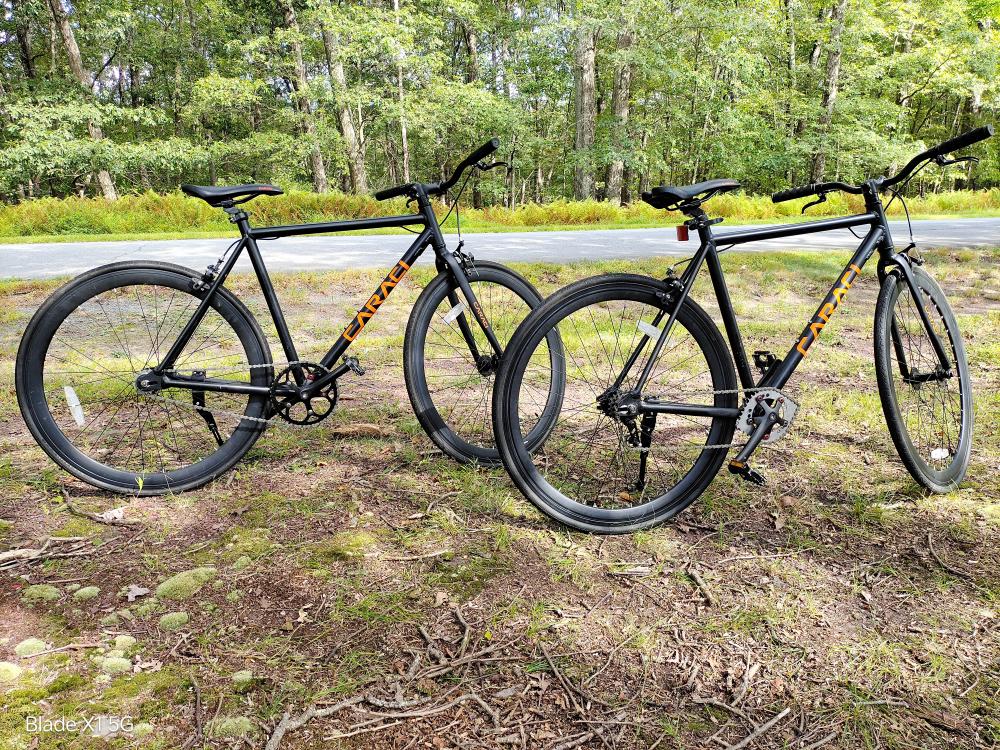
That is until you switch bikes and you get to experience the benefit of Crownring first hand while the standard bike is still fresh in your mind. I'll not spoil the surprise, but riding is believing.
The interesting thing about the black bikes is how the 48T/16 standard drive is matched by the 40T/16 Crownring drive. Completely different tooth counts resulting in ratio matched performance.
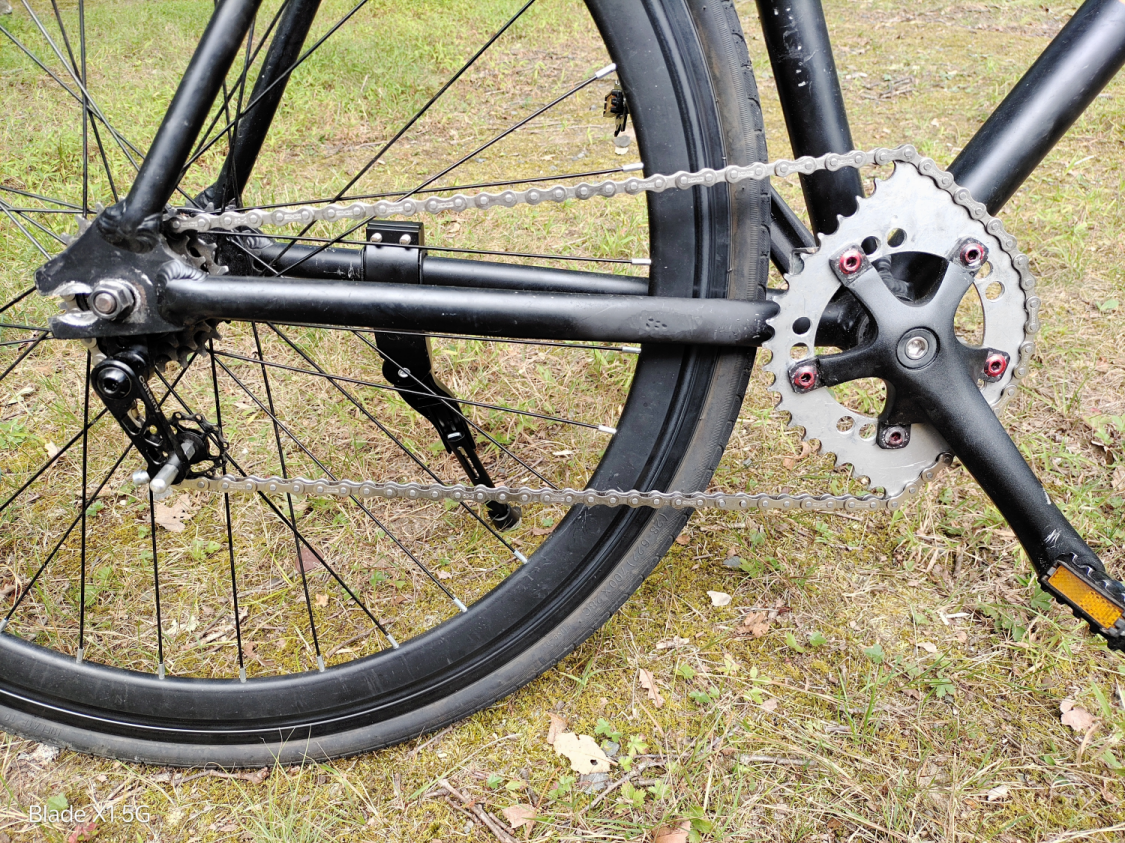
You'll notice the chain tensioner near the freewheel. This is strictly for developement and is not essential to the Crownring system. It allows me to change the size of the Crownring without having to change the chain.
Blue Bikes:
Like the black bikes, the blue bikes are intended to ride one and then the other. It's not as straight forward as the black bike's single gearing, but the ratios are the same at the highs and the lows.
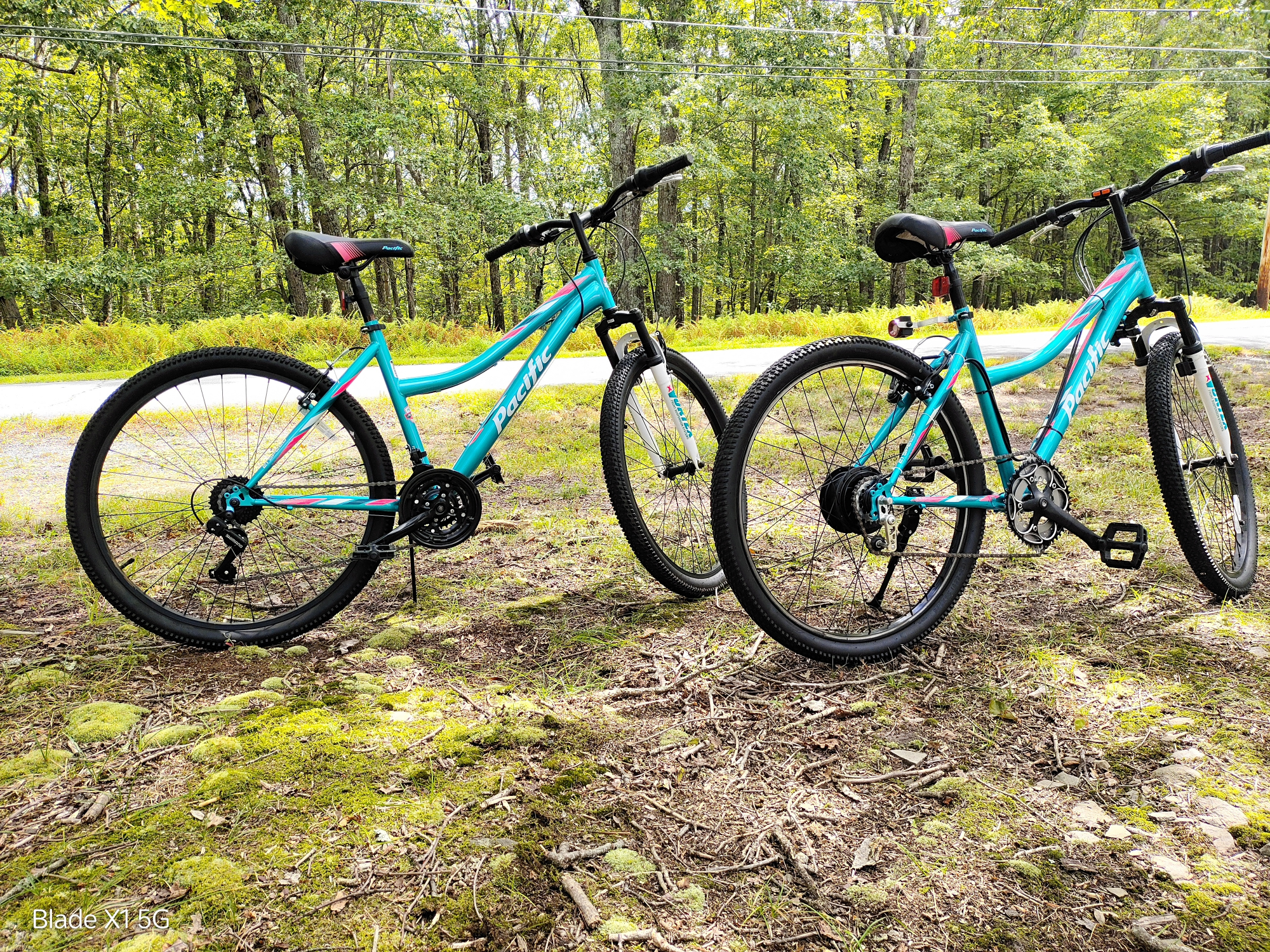
I need to explain the blue Crownring bike. I wanted an easy to manage geared bicycle without complications. The answer was a single gear shifter. For that the rear gearing needed to range equal to the 3x drive of the conventional blue bike. That would have been hundreds of dollars if not thousands for bicycles with 11 speed clusters to match the highs and lows. For $80 I converted the Crownring bike to a Continually Variable Planetary transmission (CVP). The CVP has the same basic high and low as the mountain bike drive. With a 46T Crownring and 22T rear cog the bikes matched about 98% wherein the highs are the same, but the mountain bike has one cog lower ratio. The mountain bike should be easier in low gear. But that's sort of the point of the demonstration. Again, ride it to understand.
As there are no teeth to count on the CVP bike for ratio calculations the demonstration relies on how the rider compares effort.
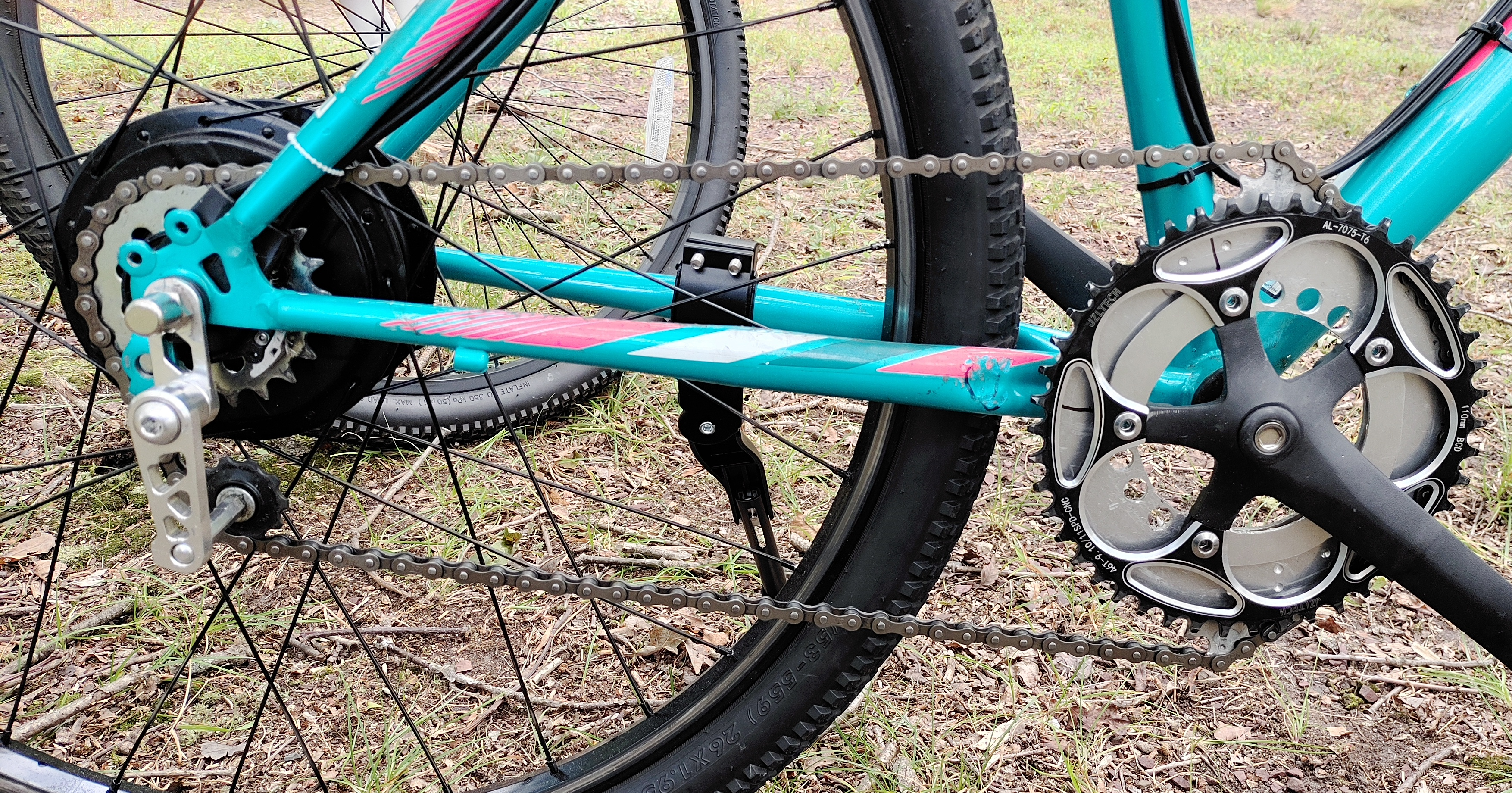
As there could be those to call foul comparing the CVP to the standard drive, the blue Crownring bike has a 46T standard chainring that can power the CVP without bias, same draw as the Crownring. That demonstration has the rider pedal at top speed on the standard chainring, and then again on the Crownring using a speedometer reading to determine performance. The difference becomes obvious, and no one can blame it on the CVP.
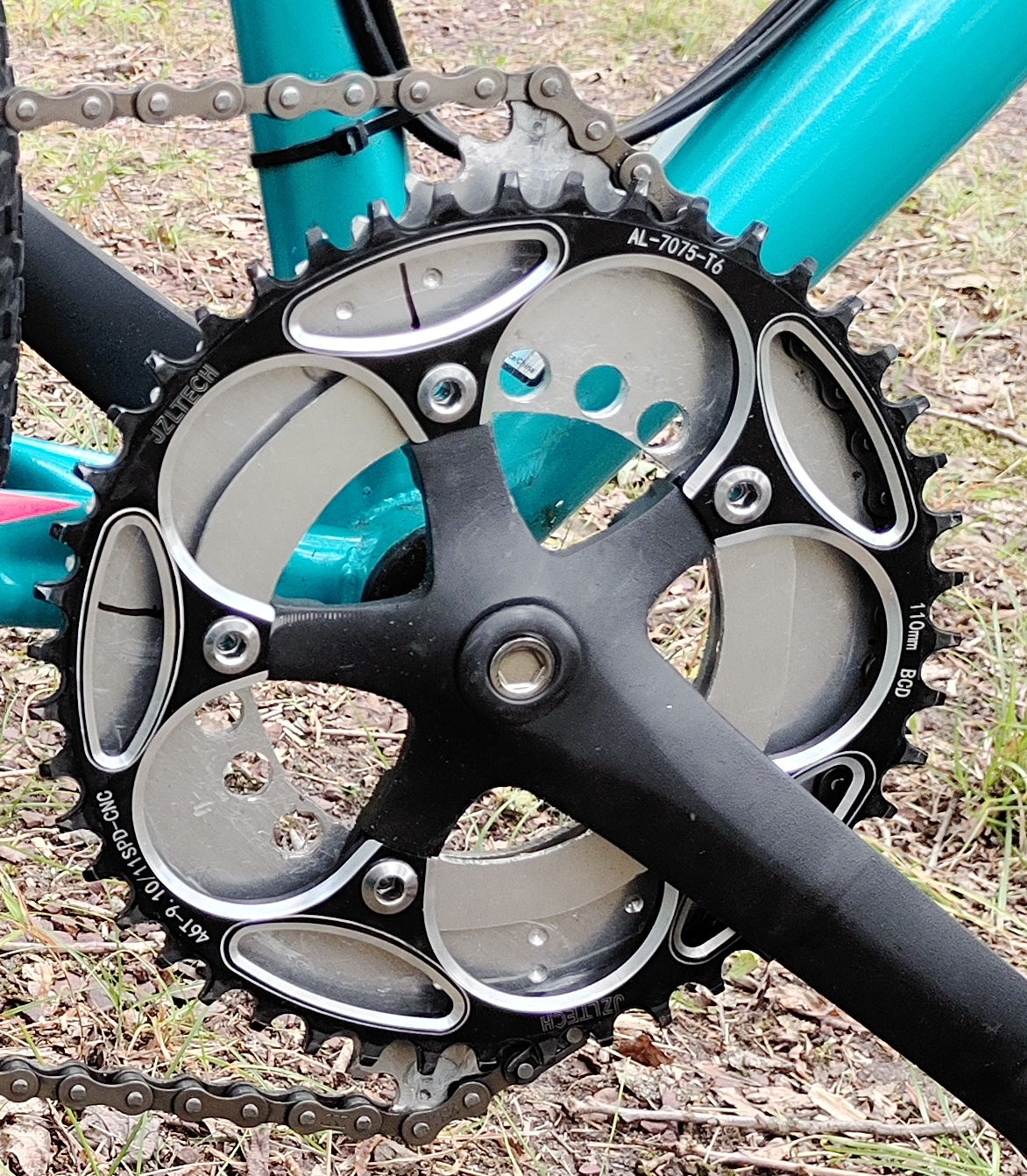
Simply put, the demonstrations have the rider use the conventional drive and then immediately use the Crownring drive. The difference is undeniable.
There are dynometer tests to determine the exact efficiency of the Crownring, but relying only on calculation and demo bike experience, efficiency has been calculated as high as 32% more than the conventional bicycle drive. Numbers vary given different conditions. As calculations are not as precise as metered testing the claim of the Crownring is that it requires about 25% less effort to manage the same ride as its T-value counterpart.
Red Bike:
I bought the red bike for its 12 speed hub and single chainring. The simplicity of only one shift lever was of interest, but the primary reason was that the 12 speed hub caused extreme chain angle. I knew the Crownring's inherent tooth gap at the declining peak left a vulnerability to chain drop. The chain literally floats for four or five teeth before it can engage again. If it does not fall directly onto the teeth it can run off of the ring on one side or the other. This is no issue with a single speed bike. There is no varied chain angle. Of all bike types the 12 speed hub has the greatest chain angle.
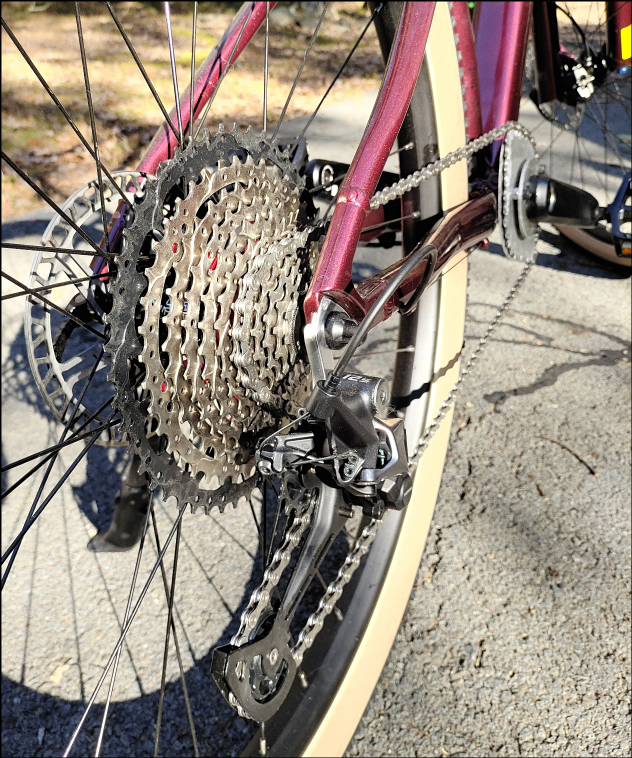
I was already aware that there were several ways to overcome chain angle. An idler sprocket to keep the chain inline with the ring was my expected resolve. I designed a few methods for that, one being a single flexible spring band mounted just before the Crownring for direct alignment that would be flexible enough to accommodate the changing chain angles.
As I explored options I decided to first go with the much easier to fabricate backing plate. After several iterations I found a design that worked on the bench. My first ride in the newly operable low gear was amusing. It would have been faster to get off and push. The point wasn't the low gear. It was to see if the backing plate left the chain to stay on in real world use.
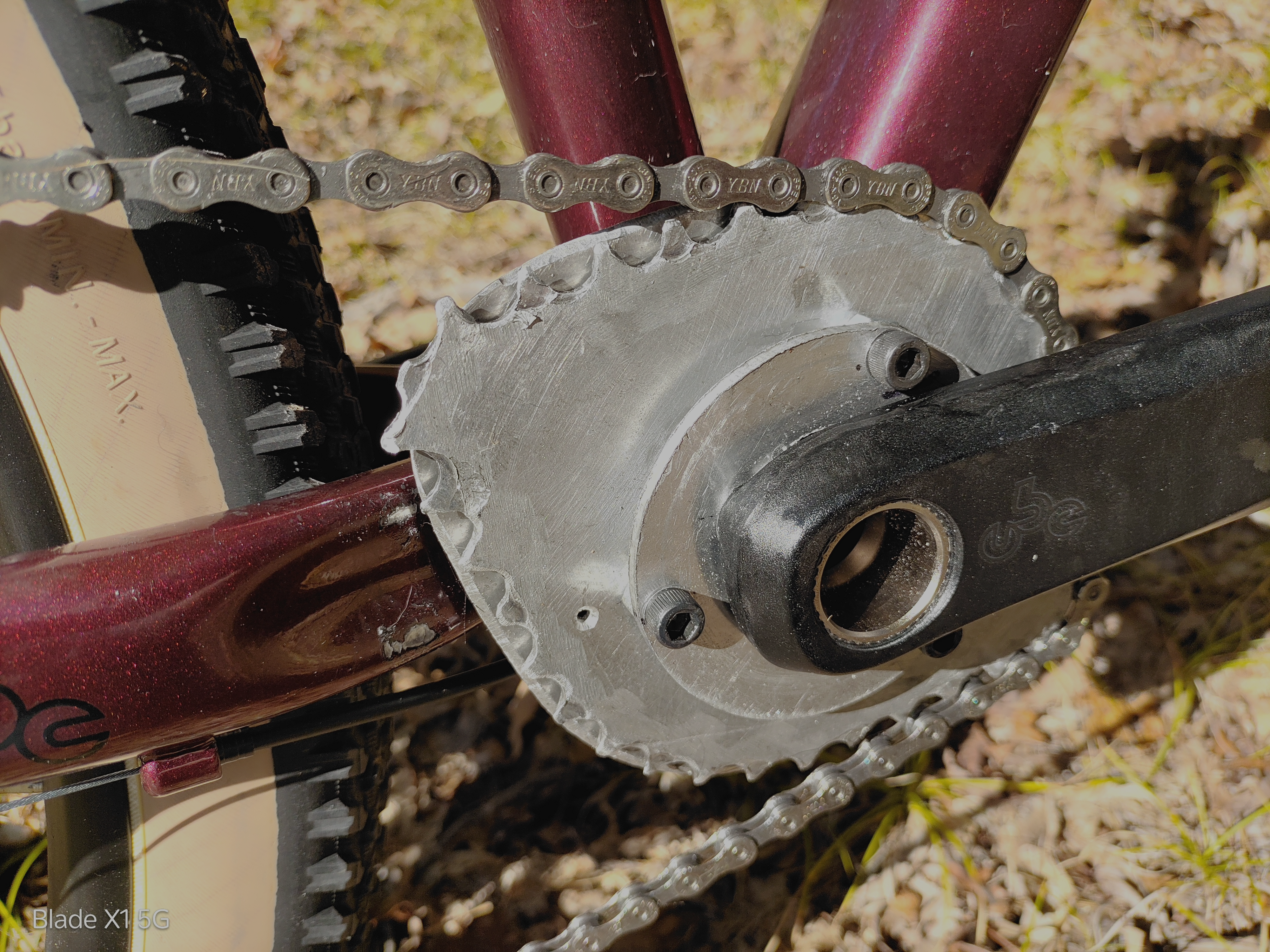
The ride revealed a few tweak potentials and my second ride was without issue…unless you see 3 mph as an issue. I dare say there are few hills that the red bike could not conquer.
The red bike had another purpose. I needed a bike to test a stretched peak. You can learn more about stretch if you follow the Stretch link on the left panel. The red bike's Crownring is 34T/30-42(2x2). Rather than the single cradle at the peak it has two. The purpose is to raise the ratio at the very end of the stroke (think speed).
One notable issue is the ratio percentage between high and low radii is about 29%. That's more strain than the Crownrings on my other bikes. They range from 22% to 25%. Add to the 29% the 20% rise in ratio due to the x2 stretch. These higher percentages make the red bike a little stiffer pedaling than the others. Of course we are speaking of high gear. But that's what high gear is for.
I am pleased with the Crownring on the red bike. It was without a doubt my hardest conversion. Not only was making the GXP chainring mount for the adapter a genuine pain in the assembly, but because of the narrow chain needed to accommodate the closely set cogs, the Crownring had to fit the very narrow links of the chain. My Crownrings have been fabricated from 1/8 inch 6061 aluminum plate. I was concerned a thinner plate could collapse. I created an alternating pattern referred to as Narrow/Wide. This left the 1/8 inch Crownring's teeth able to slip into the half as wide narrow links without giving up strength.
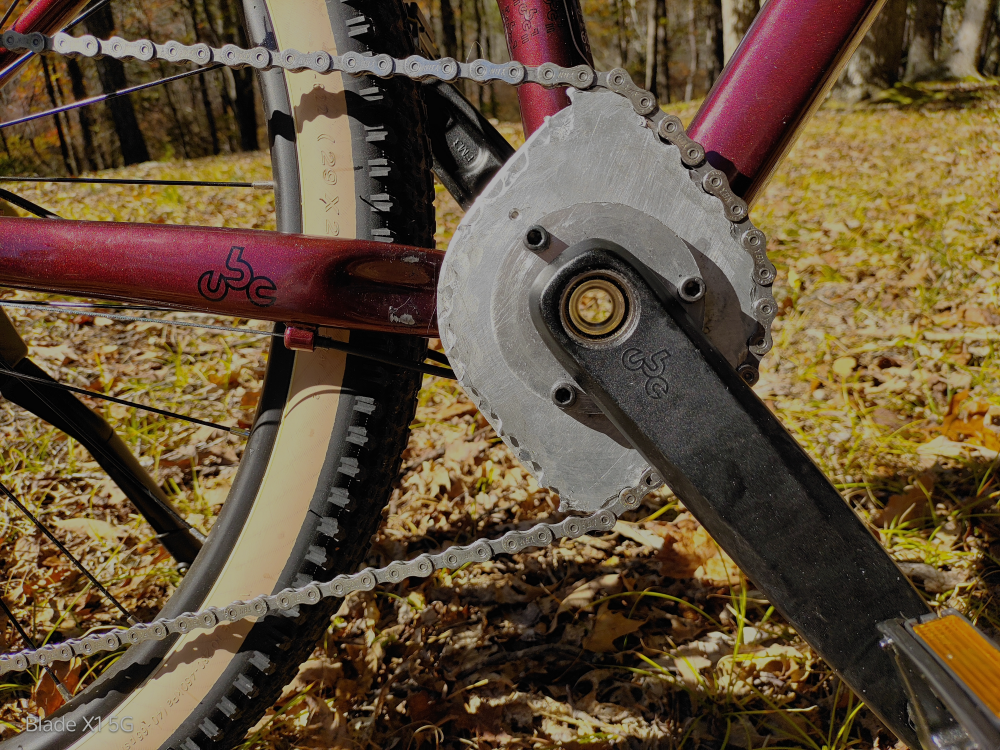
The red bike was a great bike to ride before conversion. Now it's just awesome.
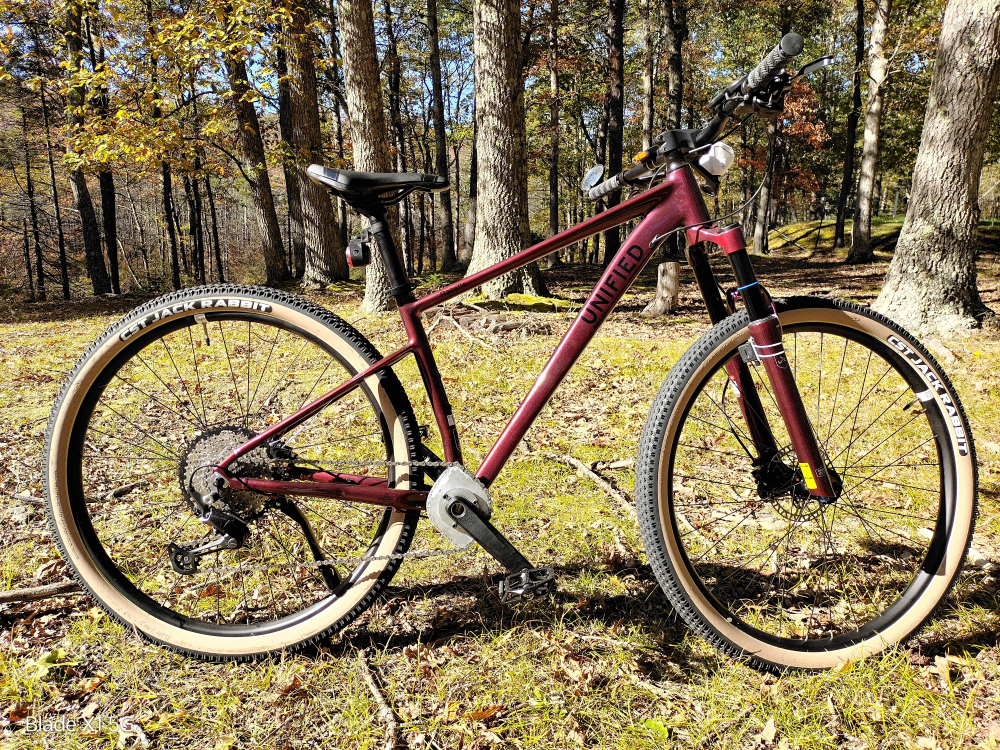
Riding is believing.
Text updated October 9, 2025